

VELOCITYLAUNCH
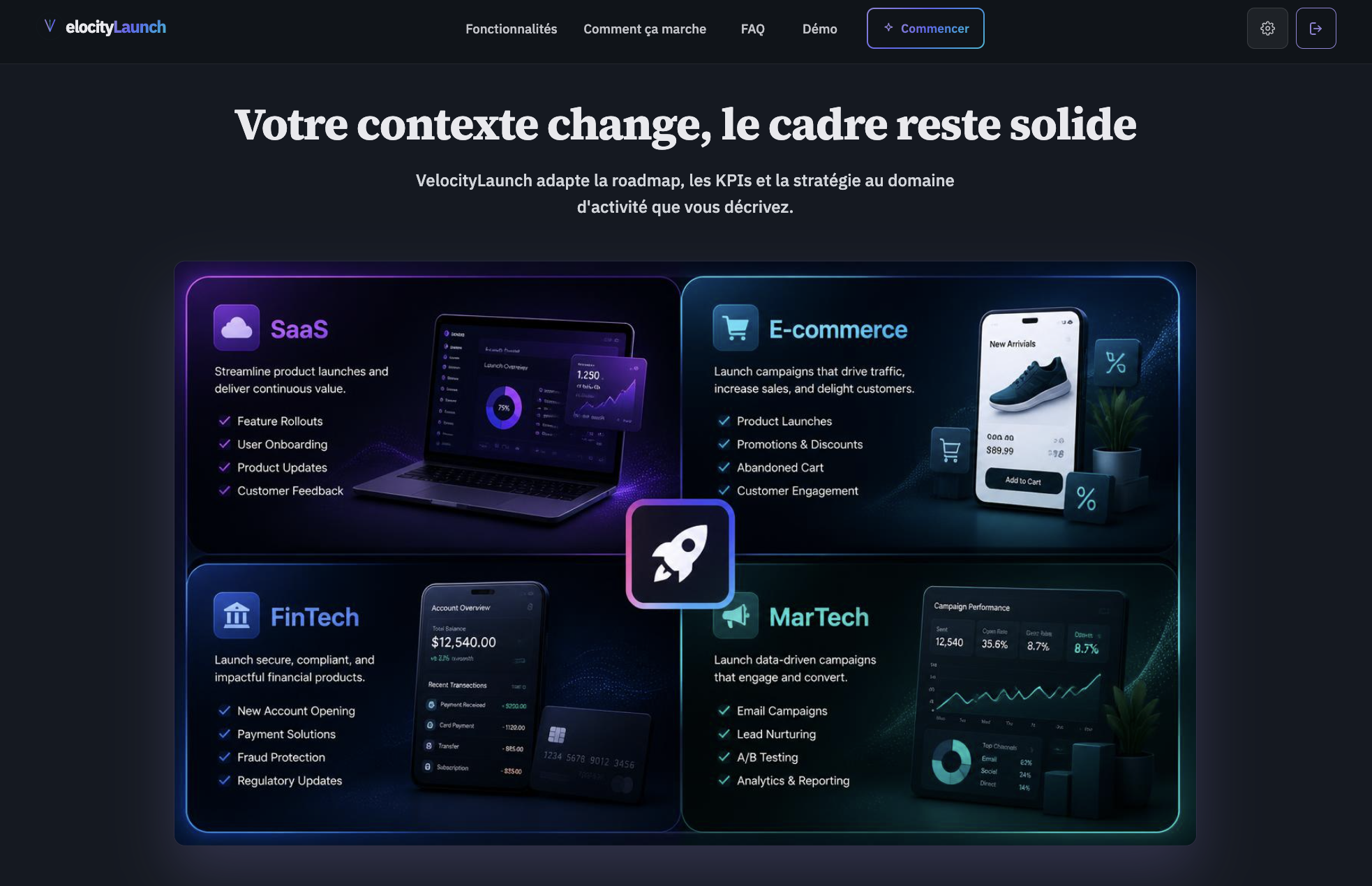
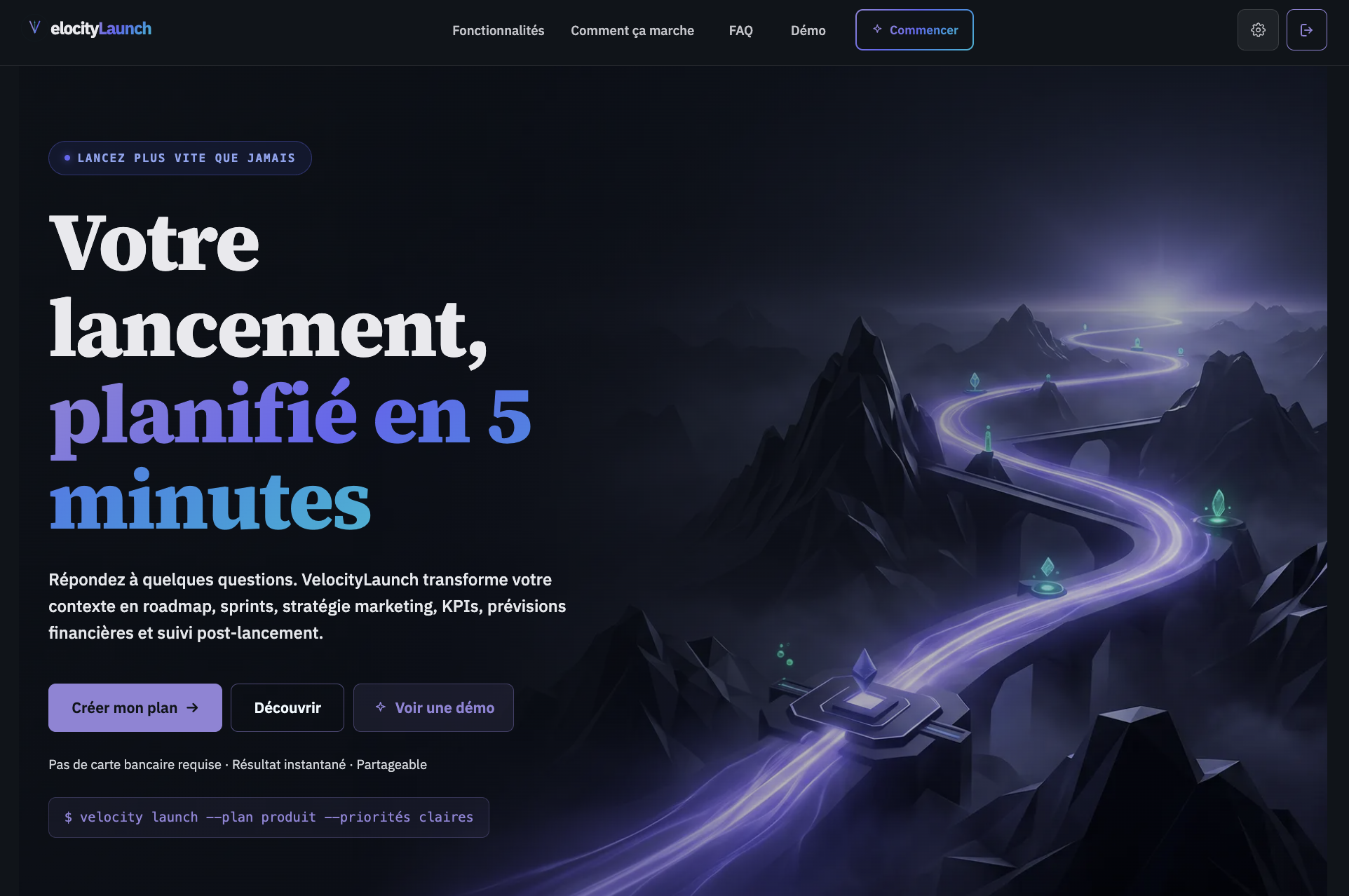
VelocityLaunch turns a product idea into a complete launch plan through a 4-step guided questionnaire: Agile roadmap with sprints and an interactive Gantt chart, channel-by-channel marketing strategy with budget figures, a personalized KPI dashboard, a financial forecast and ready-to-use exports (PDF, PPTX, Notion, Jira, GitHub). Accounts and team spaces via Clerk, Stripe subscriptions, and a Cloudflare Workers back end with AI generation backed by a local safety net.
PROJECT DETAILS
Objective
The goal was to replace the hours spent framing a product launch in a spreadsheet or scattered documents with a structured, actionable plan generated in minutes from a guided questionnaire, without ever leaving the user stuck even if the AI is unavailable.
Technologies used
The front end is React 18 with Vite and React Router, with no UI framework. The back end, a Cloudflare Worker, calls a language model through OpenRouter (function calling with a structured schema) to generate the plan, backed by a fully local, deterministic rules engine as a safety net whenever the AI is unavailable or no API key is configured. Authentication and team spaces run on Clerk (Organizations), subscriptions on Stripe, and accounts, credits and OAuth tokens are stored in Cloudflare D1. The Notion, Jira and GitHub integrations each use their own OAuth flow with idempotent two-way sync via Cloudflare Queues. Exports are generated with html2canvas, pdfmake and pptxgenjs; the front end is hosted on Netlify and the back end on Cloudflare Workers.
Challenges and solutions
The main challenge was guaranteeing a plan gets generated every time, even if the language-model call fails: the fix was to back the AI generation with a strictly local, deterministic rules engine, invisible to the end user. The third-party integrations (Notion, Jira, GitHub) had to stay idempotent so repeated exports wouldn't duplicate pages or issues already created, which required tracking the remote IDs generated for each plan.
GALLERY